
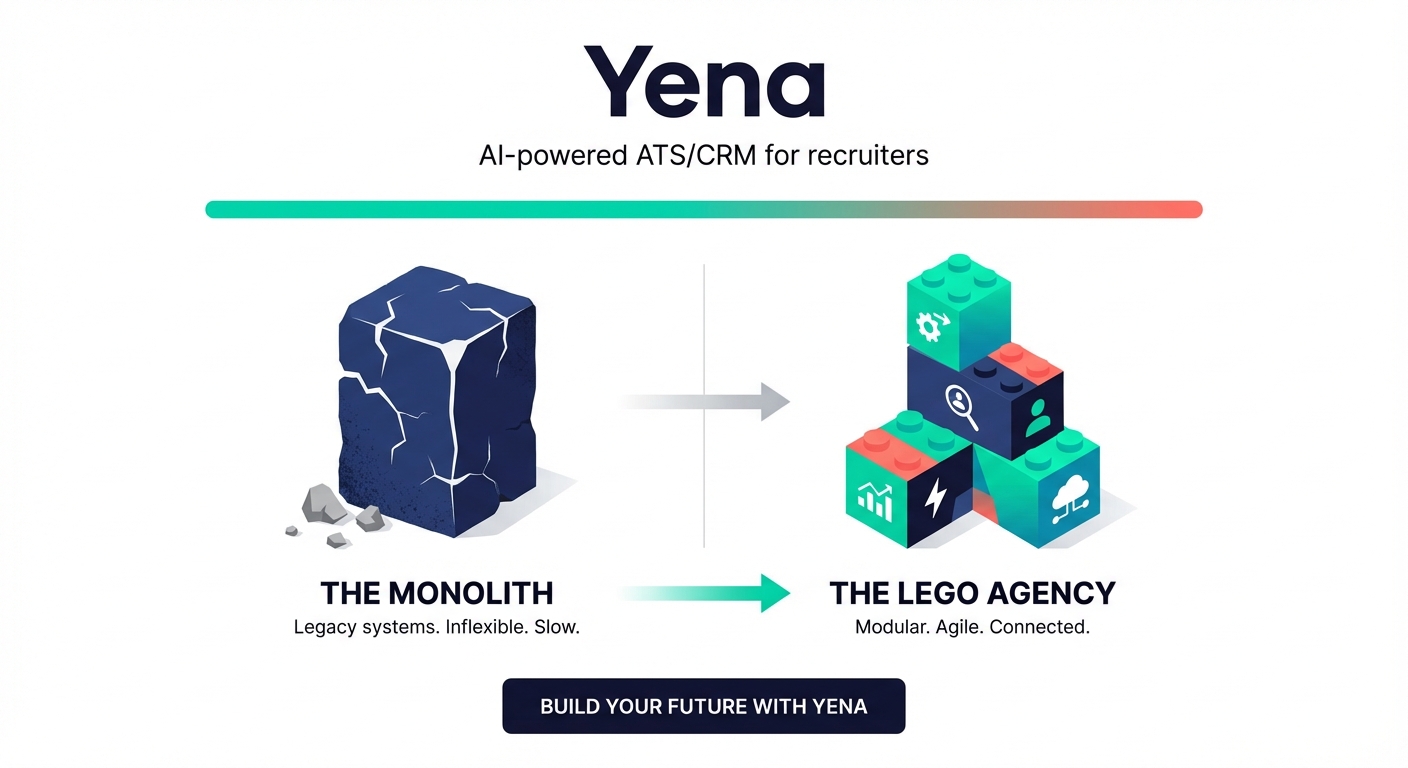
Let’s play a game. I want you to imagine your recruitment agency as a building.
For most of you reading this, your agency looks like a collection of monoliths. Big, heavy, immovable stone pillars. Each pillar is a "360-degree recruiter." They stand alone. They source alone. They interview alone. They close alone. They create their own invoices (badly). They write their own job ads (worse).
And when one of those pillars cracks—burnout, leaving for a competitor, or just having a bad quarter—a massive chunk of your revenue ceiling collapses with them.
This is the Monolith Model. It worked in 2015. In 2026, it’s a suicide pact.
The smartest agencies I’m seeing right now aren’t building with stone. They’re building with Lego blocks. They are snapping together modular functions—human experts, AI agents, and automated workflows—to build something that is faster, cheaper, and infinitely more scalable than the old model ever could be.
The Myth of the Full-Stack Recruiter
We need to be honest with ourselves. The "Full Desk" recruiter is a unicorn. And like unicorns, hunting for them is a waste of time.
Think about what you’re asking one person to do:
- ❌Be a Detective: Source candidates from the deep web, Github, and obscure forums.
- ❌Be a Copywriter: Write compelling outreach sequences that get 40%+ open rates.
- ❌Be a Salesperson: Cold call clients, negotiate fees, handle objections.
- ❌Be a Psychologist: Interview candidates, assess cultural fit, manage emotions during offer stages.
- ❌Be an Admin: Format CVs, schedule interviews, update the CRM.
Nobody is great at all of these. If they’re great at sales, they probably hate admin. If they’re amazing researchers, they might be terrified of cold calling.
By forcing them to do everything, you guarantee mediocrity in everything. And you burn them out.
The Cost of the Monolith
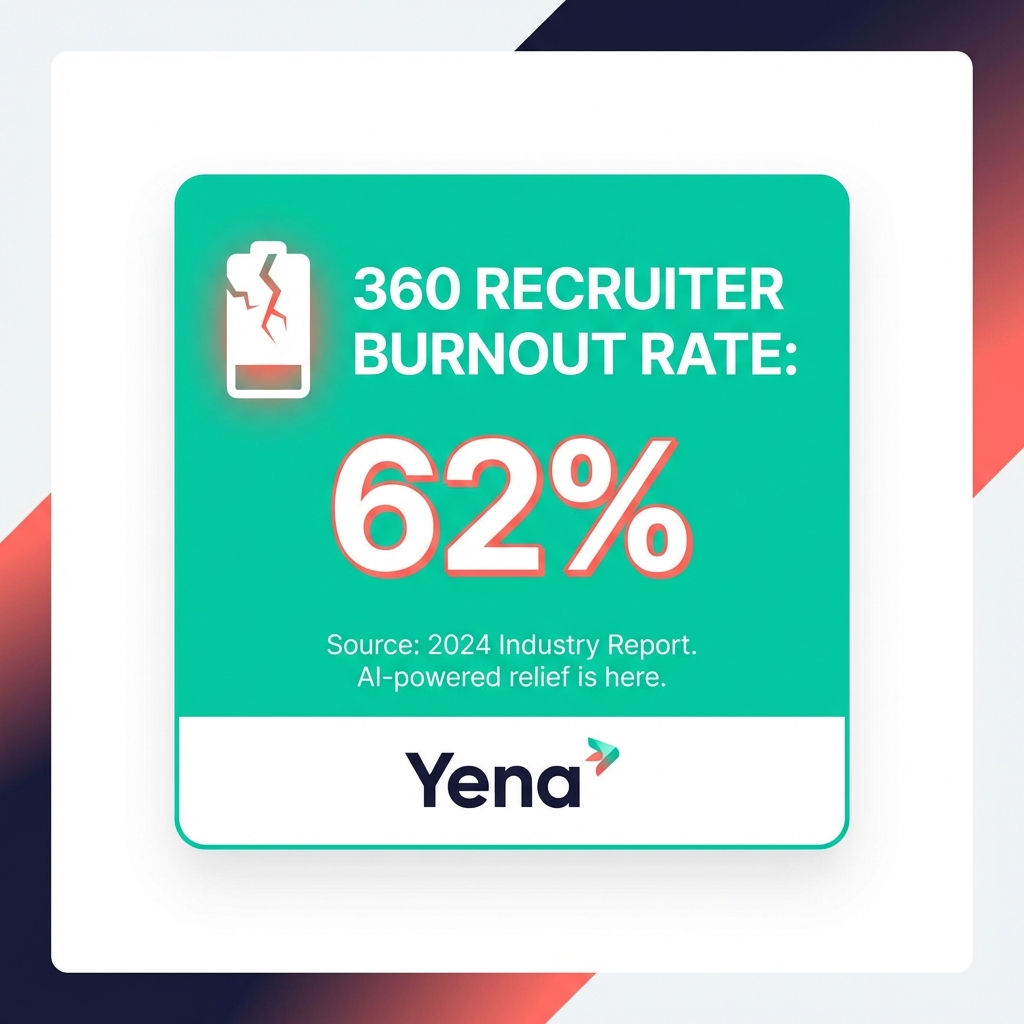
In 2025, the average tenure of a 360-recruiter dropped to 14 months. The burnout rate hit 62%.
Every time a 360-recruiter leaves, they take their pipeline, their relationships, and their "mental notes" with them. You start from zero. That’s not a business; that’s a hamster wheel.
Enter the Lego Block Model
The Lego Block Model deconstructs the recruitment lifecycle into specialized functions. You don't hire "recruiters." You hire specific skills—or you deploy AI agents to handle them.
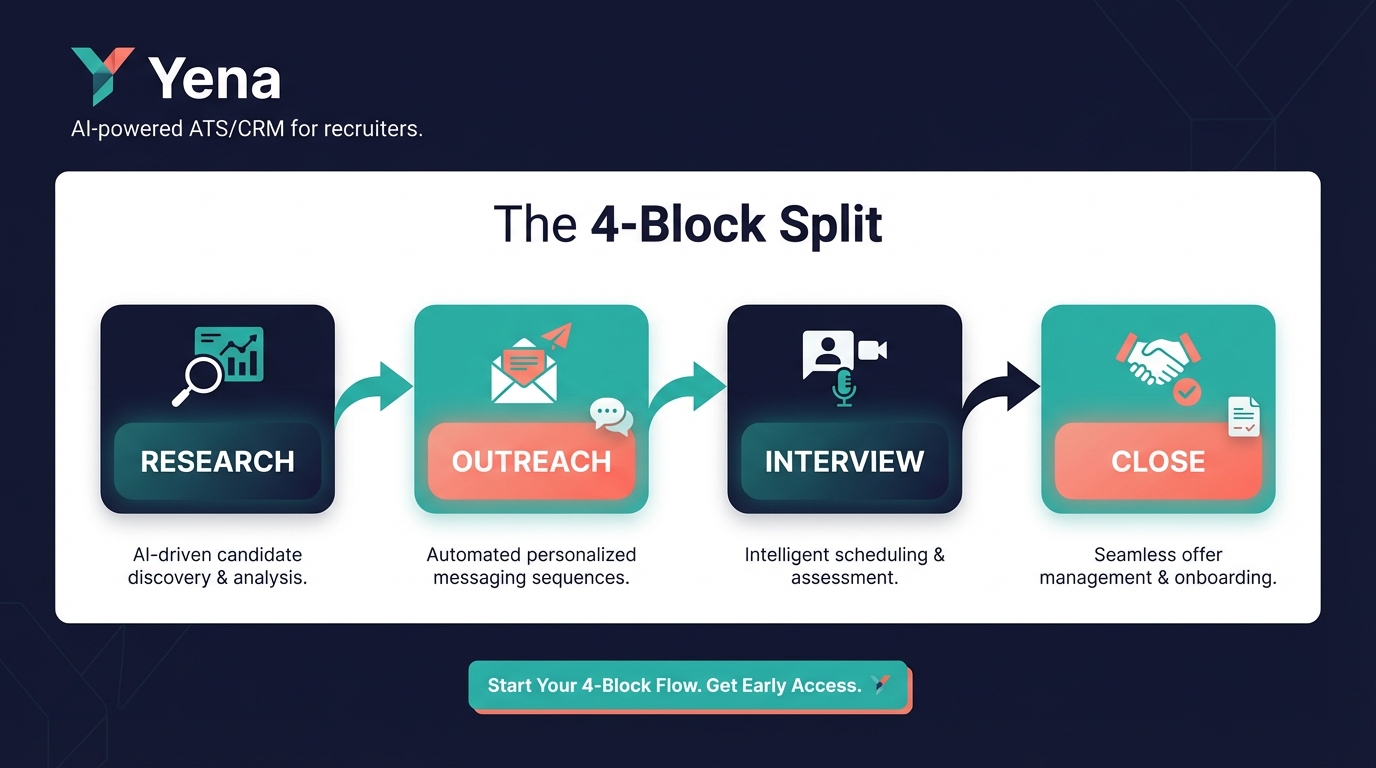
Here are the four blocks of a modern, modular agency:
Block 1: Research & Intel
The Job: Market mapping, finding contact details, identifying companies hiring.
Who does it? 90% AI (tools like Yena's AI Sourcing), 10% human oversight.
Block 2: Outreach & Engagement
The Job: Warming up candidates, initial screening, booking meetings.
Who does it? Automated sequences, personalized by low-cost SDRs or autonomous agents.
Block 3: Assessment & Consulting
The Job: Deep interviews, career coaching, client advisory.
Who does it? Senior Humans. This is where the money is. This is the "Consultant" block.
Block 4: Operations & Closing
The Job: Scheduling, contracts, invoicing, onboarding checks.
Who does it? Automated workflows (Zapier/Make/Yena). Zero human touch required.
Why Lego Agencies Win
When you switch to this model, three things happen instantly:
1. You Stop Paying £60k for Admin Work
Why are you paying a senior consultant £60,000 (plus commission) to format a CV in Word? It’s insanity. In the Lego model, the "Consultant" block only consults. They spend 80% of their day talking to high-value humans. The "Research" block (AI) handles the grunt work for pennies.
2. Scalability Becomes a Snap
Need more candidates? You don't need to hire a new recruiter and wait 6 months for them to ramp up. You just dial up the "Research" block (increase ad spend, add more AI seats). Need more sales? Dial up the "Outreach" block. You scale functions, not people.
3. Resilience
If your Senior Consultant leaves, your pipeline doesn't die. The "Research" block is still filling the CRM. The "Outreach" block is still booking meetings. You just slot a new "Consultant" block into a machine that is already running.
How to Start Building with Blocks
You don't have to fire everyone and start over. You can start swapping blocks today.
Audit Your Time
Look at your best biller. How many hours a week do they spend on tasks that aren't talking to clients or candidates? It's probably 20+ hours.
Outsource the Bottom of the Pyramid
Strip away sourcing and admin first. Implement a tool like Yena's AI Sourcing or hire a low-cost virtual researcher. Tell your billers: "Stop sourcing. Start selling."
Centralize the Data
For this to work, the "Glue" needs to be strong. Your CRM/ATS must be the single source of truth. If your data is messy, your blocks won't snap together. (See my thoughts on why most ATS fail here).
The Future is Modular
The agencies that will dominate 2026 aren't the ones with the most recruiters. They are the ones with the best engineered process.
They are treating their agency like a product. They are constantly upgrading individual blocks—swapping out a manual email sequence for an AI one, swapping out a spreadsheet for a dashboard—without disrupting the whole machine.
So, stop building monoliths. They’re heavy, they’re expensive, and they crumble. Start building with Lego. It’s a lot more fun, and it makes a hell of a lot more money.